Entry · Ref ZXMTPF_4
Orange County Plumber Services for Leaks, Drains, and Water Heaters
- Posted
- 2026-11-08
- Last amended
- 2026-11-08
- Account
- @mylesultk868
Orange County plumbing has a personality. It is part sunshine, part hard water, part slab foundation, and part “why is there a mysterious stain under the guest bathroom at 10:47 p.m. On a Sunday?” Homes here range from mid-century ranch houses with galvanized pipes that have seen things, to coastal condos where one slow drain can become a building-wide drama, to newer builds with tankless water heaters mounted neatly in garages like polite little robots.
A good plumber in Orange County needs more than a wrench and a van. They need judgment. They need to know when a leak is a simple angle stop replacement and when it smells like trouble under the slab. They need to understand why water heaters fail faster in some neighborhoods, why tree roots love older sewer laterals, and why “flushable” wipes deserve the same level of suspicion as gas station sushi.
Leaks, drains, and water heaters are the big three for most homeowners. They are also the three areas where waiting too long tends to make the bill grow legs and sprint. The good news is that most problems give hints before they become catastrophes. The trick is knowing which hints matter.
The local plumbing reality: hard water, slabs, roots, and remodels
Orange County homes have a few recurring plumbing themes. Hard water is one of them. Minerals in the water do not politely pass through your plumbing and vanish. They cling, build up, crust over, narrow openings, coat fixtures, and wear on water heaters. If you have ever cleaned white scale off a showerhead and wondered whether the faucet was forming a tiny limestone cave, congratulations, you have met hard water.
Then there are slab foundations. Many homes in the region have water lines running under or through concrete slabs. That design is common, but it can make leaks sneaky. A pipe can leak below the floor long before anyone sees water. The first clue might be warm tile, an unexplained jump in the water bill, a musty smell, or flooring that starts behaving like it is auditioning for a haunted house.

Sewer lines have their own local flavor. Older clay or cast iron sewer laterals can crack, shift, corrode, or invite roots through joints. Once roots find moisture and nutrients, they do not politely RSVP. They enter, expand, and trap debris. A rooter service can clear the immediate clog, but if roots keep returning, the line may need camera inspection and a more permanent repair plan.
Remodeling adds another layer. Orange County homeowners love an upgraded kitchen, a spa-like bathroom, and a laundry room that does not look like an afterthought. That is fine, provided the plumbing behind the walls keeps pace. New fixtures, relocated drains, pot fillers, freestanding tubs, water softeners, and tankless systems all have requirements. Pretty tile gets less charming when the drain slope is wrong.
Leaks rarely start dramatic, but they enjoy becoming dramatic
A plumbing leak usually begins as a small betrayal. A supply line weeps behind a toilet. A tub overflow gasket dries out. A pinhole leak forms in copper. A shutoff valve crusts over and drips just enough to dampen the cabinet floor. At first, it is easy to ignore. The bucket catches it. The towel handles it. Someone says, “Let’s keep an eye on it,” which is homeowner dialect for “future us can suffer.”
Plumbing leak repair is not just about stopping visible water. It is about finding why the leak happened and what else may be at risk. A wet vanity floor might be a failed p-trap nut, but it could also be a corroded drain arm inside the wall. Water near a water heater could be condensate, a relief valve discharge, or the tank itself beginning its farewell tour. Water on the floor near a washing machine might be a worn hose, a leaking valve, or a drain backup.
The leak location matters, but the material matters too. Copper, PEX, galvanized steel, ABS, PVC, cast iron, and flexible connectors all fail differently. A plumber with experience can often spot the pattern. Greenish staining on copper suggests corrosion. Rust-colored water from old galvanized lines suggests internal deterioration. Swollen baseboards suggest a leak has been feeding the wall longer than anyone wanted to admit.
The expensive part of a leak is often not the pipe repair. It is the damage around it. Drywall, cabinets, flooring, insulation, and framing do not respond well to repeated moisture. Mold concerns enter the conversation when damp materials sit long enough. That is why a small leak deserves adult supervision early, even if it looks unimpressive.
Slab leaks: the quiet villain under the floor
Slab leaks deserve their own spotlight because they are especially good at hiding. A pressurized water line under the slab can leak continuously, and the water may travel before it surfaces. Sometimes it shows up along an exterior wall. Sometimes it pushes through cracks. Sometimes the only sign is a water meter that keeps moving when every fixture is off.
Warm spots on floors often point toward a hot water line leak. Higher gas or electric bills can follow because the water heater keeps heating replacement water. If the leak is on a cold line, clues may be subtler. You might hear water running when nothing is on, or notice low pressure at fixtures.
Repair options vary. Sometimes a direct spot repair makes sense if the leak is accessible and the pipe system is otherwise healthy. In other cases, rerouting the line overhead or through walls is smarter than opening the slab and gambling on aging pipe. Plumbing repiping enters the conversation when the system has multiple leaks, old galvanized piping, widespread corrosion, or repeated failures. Nobody likes hearing that repiping may be needed, but nobody enjoys turning their home into a recurring archaeological dig either.
A proper diagnosis may include pressure testing, acoustic listening, thermal imaging, and careful isolation of lines. The goal is not to swing a hammer at the floor and hope. That is not plumbing. That is percussion with consequences.
Drains: where optimism goes to clog
Drain problems are democratic. They visit mansions, condos, restaurants, rentals, and tidy homes with suspiciously organized spice drawers. Hair, soap scum, grease, food particles, mineral scale, wipes, roots, and old pipe roughness all contribute. Most clogs develop gradually. The sink drains a little slower. The shower puddles around your ankles. The toilet bubbles when the tub drains, which is the plumbing equivalent of clearing its throat ominously.
Drain cleaning can mean different things depending on the problem. A simple fixture clog near the trap is not the same as a main sewer blockage. A bathroom sink full of hair and toothpaste sludge may need cable clearing through the drain or trap. A kitchen line packed with grease may need a different approach. A main line clog may require a cleanout access and a larger cable machine.
Chemical drain cleaners are tempting because they sit on a store shelf promising victory for the price of lunch. They are also often disappointing and occasionally harmful. They can damage older pipes, generate heat, create safety hazards for the technician who later opens the line, and still fail to remove the actual clog. If a drain repeatedly clogs, the issue is not a lack of chemicals. It is a mechanical or structural problem asking to be identified.
Here is a short homeowner triage list that can help before calling for service:
- If only one fixture is slow, the clog is likely close to that fixture.
- If multiple fixtures back up, suspect a branch line or main sewer issue.
- If lower-level drains overflow when upstairs fixtures run, stop using water and call for help.
- If sewage appears in a tub, shower, or floor drain, treat it as urgent.
- If the same drain clogs again and again, ask about camera inspection rather than another blind clearing.
That list is not meant to turn anyone into a plumber. It is meant to prevent the classic mistake of running “just one more load of laundry” while the main line is blocked. That move has ruined many afternoons and several pairs of socks.
Rooter service, hydrojetting, and the value of seeing inside the pipe
Rooter service has been around for decades because it works. A cable machine with the right cutting head can punch through many blockages and restore flow. For roots, it may cut an opening through the mass. For sludge, it can break up enough debris to get water moving. Used properly, it is a valuable tool.
Hydrojetting is different. Instead of cutting a path through the clog, a hydrojetter uses high-pressure water to scour the inside of the pipe. It can remove grease, scale, sand, sludge, and root debris more thoroughly than ordinary cabling in many situations. Restaurants rely on hydrojetting for greasy lines, but homes benefit too, especially when kitchen drains or main lines have heavy buildup.
The catch is that hydrojetting is not automatically right for every pipe. Older, fragile, broken, or badly offset lines need evaluation first. Sending high-pressure water through a pipe that is already collapsing is not a repair strategy. It is an expensive way to confirm gravity still works. A camera inspection helps determine pipe condition, locate breaks, identify root intrusion, and verify whether cleaning solved the actual problem.
Camera inspections are particularly useful in real estate transactions, older neighborhoods, and homes with recurring sewer issues. Buyers often inspect roofs, electrical panels, foundations, and HVAC systems, then ignore the sewer line carrying everything nobody wants to think about. That pipe can be one of the most expensive surprises on the property.
Water heaters: the appliance everyone ignores until the shower turns rude
Water heaters occupy a strange category. They are essential, expensive, and generally ignored until they fail. Most homeowners do not think about them unless the water runs cold, rusty water appears, the pilot will not stay lit, or the garage floor starts reflecting light in a way it definitely did not yesterday.
Traditional tank water heaters generally last somewhere around 8 to 12 years, though water quality, maintenance, installation quality, usage, and model type can push that number up or down. Tankless units can last longer with proper care, but they are not magic boxes immune to scale. In hard water areas, flushing and descaling matter.
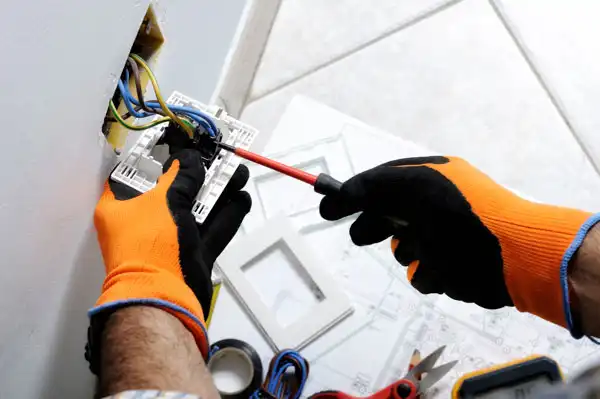
Water heater repair might involve a thermocouple, gas control valve, heating element, thermostat, expansion tank, anode rod, relief valve, dip tube, or venting issue. With tankless systems, repairs may involve sensors, ignition components, flow issues, scale buildup, or error codes. A trained plumber or gas installation service technician needs to treat combustion and venting seriously. Hot water is nice. Carbon monoxide is not a charming trade-off.
Water heater installation involves sizing, code compliance, seismic strapping, venting, gas supply, electrical requirements, drain pans where required, expansion control, temperature settings, and safe discharge piping for the temperature and pressure relief valve. That last pipe is not decoration. It is part of a safety system. If it points somewhere dangerous, is capped, or is improperly configured, it needs correction.
The right water heater depends on the household. A busy family with teenagers may need high recovery capacity or a properly sized tankless setup. A small condo may not. A large soaking tub changes the math. So does a recirculation system. Tankless units save space and can provide continuous hot water, but installation can cost more if gas lines, venting, condensate drains, or electrical circuits need upgrades. A conventional tank may be simpler and more economical in some homes.
Repair or replace? The unglamorous math
Deciding between water heater repair and replacement is partly arithmetic and partly risk tolerance. If a three-year-old unit needs a small part, repair usually makes sense. If a 13-year-old tank leaks from the bottom, replacement is the practical answer. Once the tank itself fails, there is no meaningful patch. That water heater has retired, whether or not it submitted paperwork.
Age is not the only factor. Frequent repairs, rusty hot water, rumbling sounds from sediment, slow recovery, visible corrosion, and installation defects all matter. A neglected unit in a hard water area may be less attractive to repair than a well-maintained unit with one failed component.
There is also the inconvenience cost. A water heater that fails during a calm weekday is annoying. One that floods the garage before guests arrive for Thanksgiving is performance art from the underworld. If the unit is near the end of its expected life and showing symptoms, proactive replacement can be cheaper than emergency replacement plus water damage.
Hard water and the case for softening
Water softener installation is common in Orange County for good reason. Hard water can shorten the life of fixtures, reduce water heater efficiency, leave spots on glass, stiffen laundry, and crust up appliances. A softener exchanges hardness minerals, primarily calcium and magnesium, for sodium or potassium ions depending on the system and media used. The result is water that behaves better in plumbing and appliances.
A softener is not always the right answer for every person. Some homeowners dislike the feel of softened water. Some prefer filtration for taste and odor rather than softening. Some need to consider landscape discharge rules, brine restrictions, plumbing layout, or space. In some homes, a scale reduction system may be considered, though it works differently from true softening. The best choice depends on water quality, goals, and local requirements.
From a plumber’s perspective, the important thing is correct sizing and installation. An undersized softener regenerates too often and performs poorly. A sloppy installation can create pressure issues, leaks, or bypass confusion. A well-installed system can make maintenance easier and protect expensive equipment, especially water heaters and fixtures.
When plumbing crosses paths with HVAC and electrical work
Modern homes do not keep trades in neat little boxes. A water heater may need gas, venting, plumbing, and electrical. A tankless installation may require a dedicated circuit or upgraded gas capacity. A heat pump water heater changes electrical load and garage conditions. A remodel may involve an electrician, plumber, lighting contractor, and sometimes a heating contractor before the first cabinet gets installed.
That overlap is why some homeowners prefer a company that can coordinate multiple trades. Service Lion Plumbing Heating Air Electric is one example of a multi-service provider where plumbing, heating, air, and electrical knowledge can live under one roof. That can matter when a project touches several systems, such as replacing a water heater near a furnace, adding a dedicated outlet, upgrading ventilation, or troubleshooting a comfort complaint that turns out to be part plumbing, part mechanical, and part “who installed this in 1986?”
The keywords may sound like a directory listing, but the real-world connections are practical. An air conditioning contractor may discover condensate drain problems during air conditioning maintenance. An air conditioning repair service may find that a clogged condensate line has caused ceiling stains that look like a plumbing leak. An electrician may need to install power for a recirculation pump, tankless unit, or smart leak detection valve. A furnace repair service technician may spot venting issues near shared utility spaces. A gas installation service specialist may be needed when appliance demand exceeds existing pipe capacity.
Homes are systems. They do not care which trade label is on the van.
The suspiciously wet ceiling: plumbing leak or air conditioning issue?
One of the more amusing service calls, amusing only after the damage is contained, is the wet ceiling that everyone assumes is a plumbing leak. Sometimes it is. A bathroom above the stain makes that assumption reasonable. A leaking toilet wax ring, tub drain, shower valve, supply line, or overflow can all send water downward.
But in Orange County, ceiling stains near hallways, closets, and upstairs mechanical spaces can also come from air conditioning repair issues. A clogged condensate drain, cracked drain pan, or poorly pitched condensate line can leak steadily during cooling season. The homeowner says, “But it only leaks when the AC runs,” which is the kind of clue technicians adore because it saves everyone from opening the wrong wall.
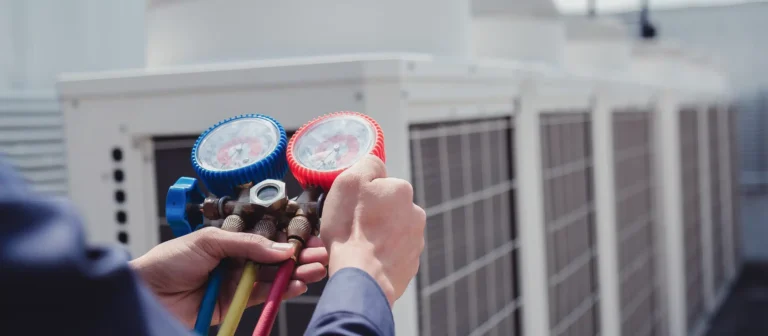
Air conditioning maintenance and an air conditioning tune-up are not plumbing services, but condensate drainage sits in the weird borderland. If the line clogs, water has to go somewhere. Sometimes it trips a safety switch. Sometimes it finds drywall. Guess which outcome costs more?
Heat pump installation can also create condensate considerations, depending on the system type and location. Again, the lesson is not that homeowners need to master every trade. It is that good diagnosis beats guesswork.
Septic systems: less common, still important
Most Orange County homes connect to municipal sewer, but some properties, especially in certain canyon, rural, or older areas, may use septic systems. Septic system service has different rules from standard sewer work. The tank, leach field, soil conditions, usage habits, and maintenance schedule all matter.
A septic backup can resemble a sewer clog at first, but the causes and remedies may differ. Pumping a septic tank may be necessary, but it is not a cure for a failed leach field or chronic overloading. Tree roots can affect septic lines too. Grease, wipes, harsh chemicals, and excessive water use can disrupt function. If a home has septic, the plumber needs to know before treating a drain problem like a normal municipal sewer blockage.
For buyers, confirming whether a property uses sewer or septic is not a small detail. It affects maintenance, inspection priorities, and long-term costs.
What a good plumber actually does during a service call
A strong plumbing visit is not just a person arriving with tools and leaving with your money. It starts with questions. When did the problem begin? Is it constant or intermittent? Does it affect hot water, cold water, one fixture, or the whole house? Any recent work? Any backups? Any unusual sounds? Has the water bill changed? Did someone drop a toy into the toilet and then claim innocence with suspicious intensity?
Then comes observation and testing. A plumber may run fixtures, check pressure, inspect visible piping, test shutoff valves, look for corrosion, use moisture meters, open cleanouts, camera a line, or isolate parts of the system. The goal is to move from symptom to cause. A slow drain is a symptom. Grease buildup, root intrusion, bad slope, collapsed pipe, or venting trouble may be the cause.
A good technician also explains trade-offs. For a drain, cabling may be cheaper today while hydrojetting may clean more thoroughly. For an old water heater, repair may work but replacement may be wiser. For aging pipes, another patch may buy time while repiping solves the pattern. For a slab leak, opening the floor may be direct, while rerouting may reduce future risk.
No homeowner wants a lecture. But most appreciate clear options, honest limitations, and fewer surprises.
Warning signs worth taking seriously
Some plumbing symptoms are mild. Others are red flags with jazz hands. If you notice a sudden drop in water pressure, sewage backing up, water near electrical components, a water heater leaking from the tank, gas odor near an appliance, or a water meter moving when everything is off, do not wait for the situation to become more cinematic.
Gas odor deserves special respect. Leave the area, avoid switches or flames, and contact the gas utility or emergency services as appropriate. A plumber qualified for gas installation service can repair or replace gas piping and appliance connections, but active gas safety concerns need immediate action.
Water near electrical panels, outlets, or fixtures also changes the urgency. That is where plumbing and electrician expertise may both be needed. Water and electricity are a famously bad pairing, right up there with toddlers and permanent markers.
Preventive maintenance that is actually worth doing
Maintenance does not need to become a second career. Most homeowners are not looking for weekend hobbies involving valves and drain traps. Still, a few habits help prevent expensive messes.
Check under sinks every couple of months. You are looking for staining, swelling, mineral crust, and slow drips. Exercise shutoff valves gently if they are accessible and in decent condition, though old crusty valves may fail when touched, because plumbing enjoys comedy. Watch the water pressure. Excessive pressure can stress pipes, fixtures, water heaters, and appliances. Many homes do best around a moderate pressure range, often roughly 50 to 70 psi, though specific conditions vary. If pressure is too high, a pressure reducing valve may be needed or may have failed.
Flush tank Air conditioning repair service water heaters periodically if recommended for the unit and local water conditions. In hard water areas, sediment can collect and reduce efficiency. Tankless systems need descaling at intervals based on hardness and usage. Replace old washing machine hoses before they become indoor sprinklers. Avoid pouring grease down kitchen drains, even with hot water. Hot grease becomes cool grease somewhere down the line, where it begins building its little kingdom.
Schedule drain cleaning when symptoms appear rather than after the backup. If a line has a known root problem, plan maintenance around reality instead of hope. Hope is not a root barrier.
Remodels, additions, and the temptation to “just move that drain”
Plumbing changes during remodels deserve planning. Moving a sink across a kitchen is not just a design choice. Drain slope, venting, water lines, wall structure, cabinet layout, slab conditions, and code requirements all enter the chat. Adding a bathroom is even more involved. The location of the main sewer, available vent paths, pipe sizing, fixture units, and access all affect cost and feasibility.
The same is true for laundry relocations, outdoor kitchens, garage sinks, and new hose bibbs. A skilled plumber can often find a clean route, but the best route is not always the shortest. Sometimes the shortest route cuts through finished spaces, structural members, or future regret. Planning early saves money because it avoids rework after cabinets, tile, or countertops are in place.
Lighting contractor and electrician coordination often matters in remodels too. Open walls create opportunity. If you are already exposing framing for plumbing, it may be the right time to upgrade wiring, add lighting, install outlets, or prepare for future appliances. The order of operations matters. Drywall does not enjoy being reopened.
Price, value, and why the cheapest fix sometimes gets expensive
Plumbing pricing varies by access, material, urgency, complexity, permits, equipment, and risk. A simple toilet supply line replacement is not in the same universe as locating and rerouting a slab leak. Mainline hydrojetting with camera inspection costs more than plunging a sink, because the equipment, skill, and result differ.
The cheapest option is sometimes perfect. If a disposal knockout plug was never removed and the dishwasher will not drain, the fix is simple and satisfying. If the main sewer line has root intrusion every six months, the cheapest repeated clearing may cost more over time than a proper repair. If a water heater is past its reasonable life and corroding, repairing one component may simply delay the inevitable by a few chilly showers.
Good value means the repair fits the problem, the home, and the homeowner’s plans. If someone is selling a house, they may choose a different path than someone settling in for twenty years. If the pipe system is otherwise solid, a targeted repair makes sense. If it is failing in sections, bigger work may be more honest.
A few questions worth asking before hiring
You do not need to interrogate a plumber like a courtroom drama, but a few questions help separate professionals from guessers.
- What do you think caused the problem, not just the symptom?
- Are there repair options, and what are the trade-offs?
- Do you recommend camera inspection, pressure testing, or other diagnostics?
- Is the work code-compliant, and are permits needed?
- What should I watch for after the repair?
Clear answers build trust. Vague answers do not automatically mean dishonesty, but they may mean the diagnosis is incomplete. Plumbing has enough uncertainty without adding fog.
The homeowner’s best advantage: noticing early
Most plumbing disasters begin with a whisper. A drain slows. A water heater pops and rumbles. A faucet loses pressure. A cabinet smells musty. A toilet gurgles. A wall stain appears and is immediately blamed on “humidity,” the usual scapegoat.
Noticing early gives you options. A small leak can be repaired before cabinets rot. A drain can be cleaned before sewage backs up. A water heater can be replaced before it floods. A pressure problem can be corrected before it damages fixtures. A camera inspection can reveal whether rooter service, hydrojetting, repair, or replacement makes sense.
Orange County homes are too valuable, and honestly too full of nice flooring, to let plumbing problems freestyle. Whether you need plumbing leak repair, drain cleaning, water heater installation, water heater repair, plumbing repiping, water softener installation, or help figuring out whether the wet ceiling belongs to the plumber or the air conditioning contractor, the smartest move is the same: diagnose first, repair second, and keep panic in reserve for truly important things, like realizing the only working bathroom is the one currently under repair.
Name: Service Lion Plumbing Heating Air Electric
Address: 521 W Briardale Ave, Orange, CA 92865, United States
Phone: (657) 337-3622
Website: https://callservicelion.com/
Email: [email protected]
Hours:
Monday: Open 24 hours
Tuesday: Open 24 hours
Wednesday: Open 24 hours
Thursday: Open 24 hours
Friday: Open 24 hours
Saturday: Open 24 hours
Sunday: Open 24 hours
Open-location code: R48R+WV Orange, California, USA
Map/listing URL:
https://www.google.com/maps/search/?api=1&query=Google&query_place_id=ChIJQU4LBWHV3IARtnABtyykSA4
Google Map:
Socials:
https://www.facebook.com/ServiceLionCA/
https://www.youtube.com/channel/UCR_L35QzsRTxYZtX8PxJvPw
Local Service Information
Service Lion Plumbing Heating Air Electric provides plumbing, drain, heating, air conditioning, and electrical services from its Orange, California location.The company serves homeowners and properties throughout Orange and communities across Orange County and surrounding areas.
Available services include plumbing repairs, water heater work, drain and sewer services, heating and cooling service, electrical repairs, panels, lighting, outlets, and related home-system work.
Service is available for residential properties as well as light commercial needs described within the company's local service-area information.
The company's website emphasizes locally operated service, coordinated home-system support, and practical scheduling for plumbing, HVAC, and electrical needs.
The matching public business listing shows the Orange location as open 24 hours a day, seven days a week.
For service information or scheduling, call (657) 337-3622 or visit https://callservicelion.com/.
The public map listing identifies the business at 521 W Briardale Ave, Orange, CA 92865 and can be used for location and direction information.
Popular Questions About Service Lion Plumbing Heating Air Electric
What services does Service Lion Plumbing Heating Air Electric provide?
The company provides plumbing, drain and sewer, heating, air conditioning, and electrical services. Its published services include plumbing repair, water heaters, drain clearing, sewer work, HVAC repair and installation, electrical repairs, panels, circuit breakers, lighting, outlets, and related services.
Where is Service Lion Plumbing Heating Air Electric located?
The matching business location is 521 W Briardale Ave, Orange, CA 92865, United States.
What areas does Service Lion Plumbing Heating Air Electric serve?
The company serves Orange County and surrounding communities. Its published service-area information includes Orange, Anaheim, Brea, Yorba Linda, Fullerton, Huntington Beach, Newport Beach, Costa Mesa, Irvine, Lake Forest, and additional nearby cities.
Is Service Lion Plumbing Heating Air Electric open 24 hours?
The matching public business listing shows the location as open 24 hours on Monday through Sunday.
Does Service Lion Plumbing Heating Air Electric work on drains and sewer lines?
Yes. Published services include drain clearing, rooter service, camera inspection, hydro jetting, sewer line repair and installation, water line work, slab leak detection, and trenchless sewer line repair.
Does Service Lion Plumbing Heating Air Electric provide heating and air conditioning service?
Yes. Its published HVAC services include air conditioning repair and installation, heating service, furnace work, heat pumps, air ducts, indoor air quality assessments, and thermostat installation.
Does Service Lion Plumbing Heating Air Electric provide electrical service?
Yes. Published electrical services include repairs and installations, electrical panels, circuit breakers, safety inspections, lighting, outlets and switches, surge protection, generators, and EV charging equipment installation.
How can I contact Service Lion Plumbing Heating Air Electric?
Call (657) 337-3622.
Email: [email protected]
Website: https://callservicelion.com/
Facebook: https://www.facebook.com/ServiceLionCA/
Landmarks Near Orange, California
Old Towne Orange Historic District
A central historic district and useful geographic reference point for the Orange community.
Plaza Park
A well-known public gathering point in the center of Old Towne Orange.
Orange Public Library & History Center
A civic landmark serving residents near central Orange.
Hart Park
A major public park and recreation area south of central Orange.
Eisenhower Park
A public park serving neighborhoods in northern Orange.
Santiago Oaks Regional Park
A regional recreation and open-space landmark on the eastern side of Orange.
Irvine Regional Park
A large regional park and recognizable reference point east of the city.
Orange Park Acres
A distinctive residential community and service-area reference point in eastern Orange.
El Modena
An established Orange neighborhood that provides a practical local coverage reference.
Glassell Street
One of the city's principal north-south streets and a useful route through central Orange.
Lincoln Avenue
A major east-west roadway serving northern Orange and nearby communities.
State Route 55
A primary regional freeway connecting Orange with other parts of Orange County.